
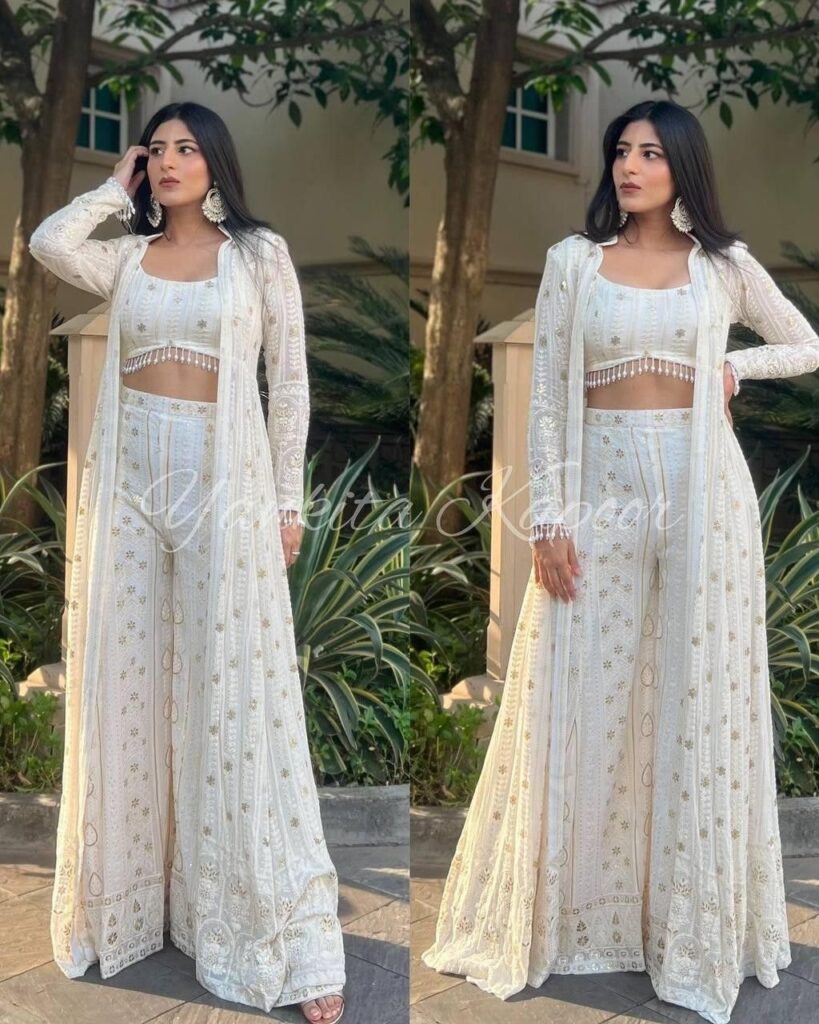
A sharara suit is a three-piece ensemble consisting of:
The Dupatta: A coordinating scarf that completes the look.
The Kurti: Usually short (mid-thigh) to show off the flare of the pants, though long kurtis are also a modern trend.
The Sharara: Wide-legged trousers that flare out dramatically from the waist or hip.Note: Do not confuse this with a Gharara, which is cinched at the knee with a band (often hidden by a gota lace) before it flares out.
The beauty of a white canvas is how well it showcases Indian craftsmanship.
| Fabric | Best For | Popular Embroidery |
| Cotton / Mulmul | Daytime events, Haldi, or Casual wear. | Chikankari (white-on-white) or Gota Patti. |
| Georgette / Chiffon | Weddings and parties (great for “twirling”). | Mirror work, Sequins, or Mukaish. |
| Silk / Chanderi | Receptions or Festivals like Eid. | Zardozi (gold/silver thread) or Banarsi weaves. |
| Organza | Modern, high-fashion looks. | Floral thread work or hand-painted motifs. |
Because the outfit is monochromatic, your accessories determine the “vibe.”
- The Regal Look: Pair with Kundan or Polki jewelry and an embroidered potli bag. This is perfect for a bride or a close family member at a wedding.
- The Bohemian Vibe: Add oxidized silver jewelry and colorful juttis. This works beautifully for a Sangeet or a casual festive lunch.
- The Contemporary Twist: Swap the traditional kurti for a crop top or a peplum jacket. You can even cinch the dupatta at the waist with a thin metallic belt for a structured silhouette.
- The Pop of Color: Since white is a neutral base, you can carry a contrasting vibrant dupatta (like Phulkari or Bandhani) to instantly transform the look
- Occasion Guide
- Nikkah: Off-white or ivory shararas with heavy silver embroidery are the standard for elegance.
- Mehendi/Haldi: A white cotton sharara with yellow or green floral prints is a fresh, “cool” alternative to heavy silks.
- Summer Weddings: Breathable georgette or organza keeps you comfortable while looking sophisticated..